
A Bit of History Laura initiated this three-ish year project to improve the approach to the house’s front door. I too thought it could be improved and we therefore took it on without completely nailing down what we wanted. Nonetheless, we knew enough to get started, whittling away at it in phases. While we didn’t …
Category Archives: Design
A Car Chase Done Well
If you’ve seen One Battle After Another, I wonder if the car chase toward the end had an impact on you. I’m going to add a snippet of it here and hope I don’t get in trouble for hosting it. Why tempt trouble? I’m glad you asked. You can picture many (most? all?) Hollywood car …
Wind Maps

For those who don’t know, Denver sits adjacent to the Rocky Mountains in what would relatively speaking would be called a flat plain (the further east one goes, the flatter land gets). Given that, you’ll no doubt spot the boundary between mountains and plains. It’s fascinating to see how the wind rips down the mountains …
Italian Doors
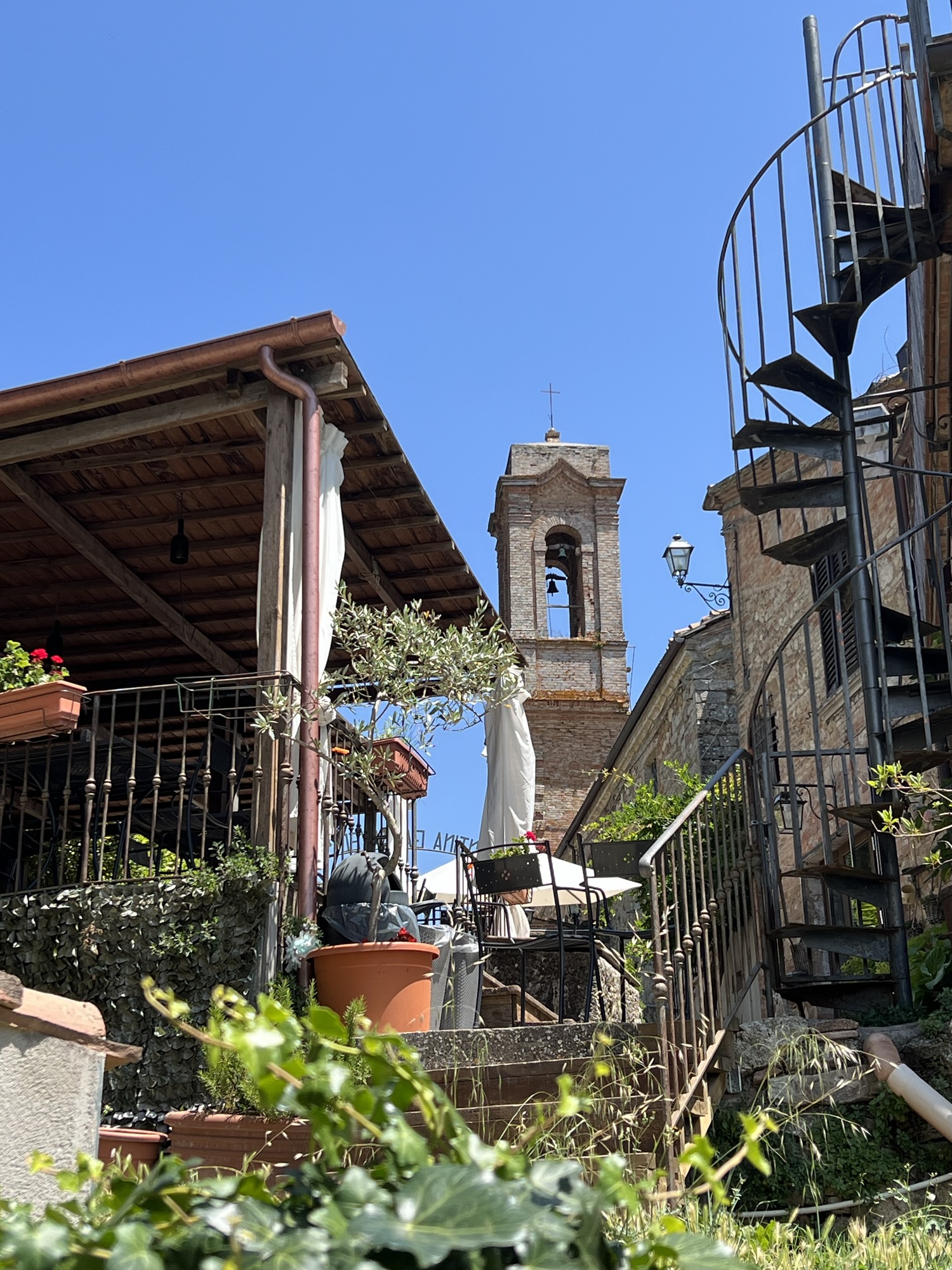
Here are all the doors I snapped during our trip to Rome, Florence, Montepulciano, and Montalcino in July, 2025. And yes, I take photos of doors while vacationing. As a bonus, here’s the hand burned front door of our old Sonoma County, CA house and our newly painted door at our current Denver home. It’s …
Impressed…But Only in the Slightest, Unimportant Way

Trump is clearly a lying, corrupt, inept, incurious, narcissistic, amoral jackass. But, damn it, his signature is fantastic. Note: His signature attained notoriety after a birthday card to Jeffrey Epstein surfaced. It’s still great even as we add probable pedophile to his biography. I expect to update this post again as probable turns out to …
Continue reading “Impressed…But Only in the Slightest, Unimportant Way”
Design Systems: Rules vs. Norms

Atomic Design “…introduces a methodology for thinking of our UIs as thoughtful hierarchies…” writes Brad Frost. His system begins with atoms, the smallest documented units — think buttons, typographical styles, and the like. Combining atoms together creates a molecule. Multiple molecules and/or atoms in combination form an organism, and so on up the hierarchy. Any atom will …
Why Snowflakes Are Counterintuitively Integral to Design Systems
The problem Design systems (e.g. style guides, pattern libraries, etc.) are all the rage. They speed product design through consistency of patterns, components and behaviors which, in turn, drives out random, one-off elements (let’s call them ‘snowflakes’). It’s a noble goal, except that design systems also slow down product teams. The drive for consistency and …
Continue reading “Why Snowflakes Are Counterintuitively Integral to Design Systems”
Book Notes: Dark Matter and Trojan Horses

Notes (quotes, really) from Dan Hill’s Dark Matter and Trojan Horses. A Strategic Design Vocabulary. Some of these are a tad out of context. I’d read the book if I were you. It’s very good, short and has both high level strategy ideas and lower level tactical examples. Photo: By Forest Wander from Cross Lanes, USA (Center Milky Way Galaxy …
Continue reading “Book Notes: Dark Matter and Trojan Horses”
UX Agencies Sell (and Clients Buy) Informed Decision Making

What is User Experience (UX)? UX is a process, an approach, a way of thinking and an outcome. Outcome, in particular, is the key aspect to UX’s value. Are you solving a real problem? Are you tackling something meaningful to people? Are you bettering the organization, the system, the… whatever? I hope so. Otherwise, you’re …
Continue reading “UX Agencies Sell (and Clients Buy) Informed Decision Making”
UX Design and Congress are More Similar Than You Think

I listened to this interview with retiring US Representative Rush Holt and it struck me how well his viewpoint could be applied to client services. (Alas, the episode is no longer available from the Decode DC podcast archive [it was episode 44]) Holt makes the case that his time in Congress was one where he …
Continue reading “UX Design and Congress are More Similar Than You Think”